
Newlands has drawn impressive crowds for the opening two days of the third Test between South Africa and Australia, raising questions about the difference between Cape Town and the rest of the country.
By Marco Jacobs | Kairos Sport
Cape Town has made its statement.
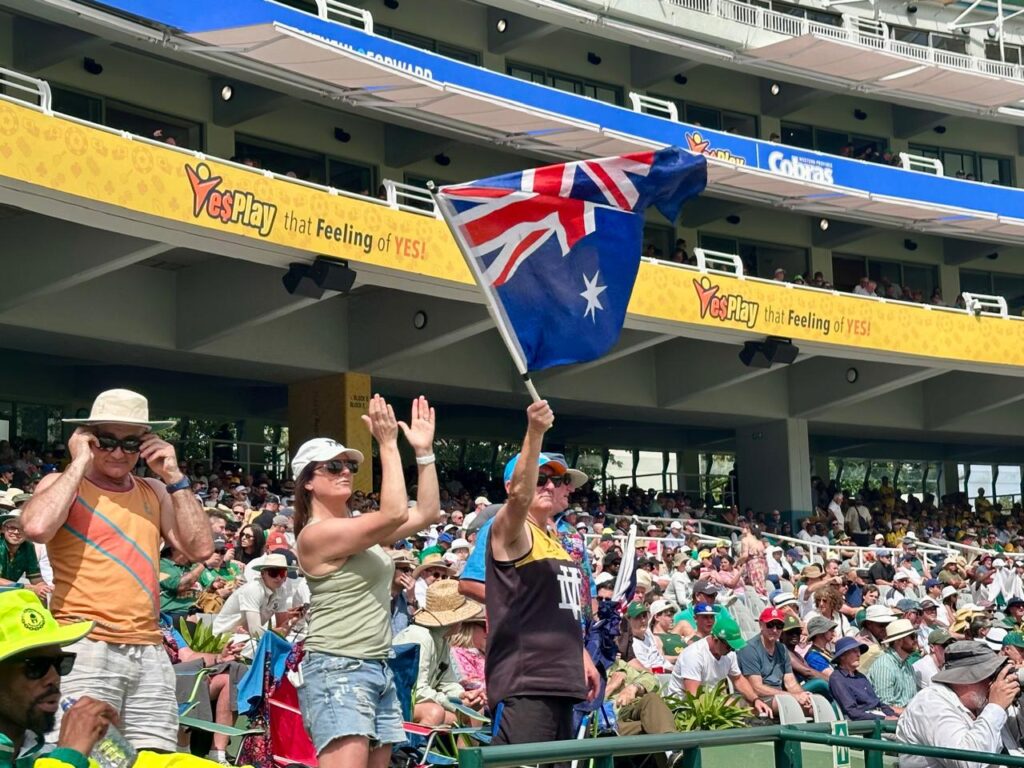
On a Tuesday, when most South Africans were heading to work, 11,028 spectators walked through the gates at Newlands to watch the opening day of the third Test between South Africa and Australia. On day two, another 9,699 supporters turned up.
That is a combined attendance of 20,727 across the opening two days of the series decider.
Those numbers might not represent a full house, but in the context of the disappointing crowds at Kingsmead in Durban and St George’s Park in Gqeberha, they tell an important story.
There is still an appetite for Test cricket in South Africa.
The question is why Cape Town appears to be answering the call when other cities have struggled to attract supporters to the same contest.
Newlands is more than just a cricket ground
There is something special about Newlands.
The backdrop of Table Mountain, the history of the venue and the atmosphere generated by supporters combine to create an experience that is difficult to replicate elsewhere.
Newlands is not simply a place to watch 22 players compete. For many Cape Town cricket lovers, it is part of the city’s sporting identity.
The ground has hosted generations of supporters, and a Test match against Australia carries a particular significance. This is one of cricket’s great rivalries, featuring the reigning World Test Championship winners against the world’s top-ranked Test side.
The series has delivered competitive cricket, and the deciding Test gives supporters another reason to be there.
But scenery and history alone cannot explain the difference in attendance. Other South African grounds have their own proud traditions, and their supporters deserve the same recognition.
Something else is happening in Cape Town.
Cape Town makes a plan
Perhaps the most interesting part of the Newlands attendance figures is the timing.
The Test began on Tuesday, 27 October. This was not a public holiday or a Saturday afternoon fixture around which supporters could easily organise their weekend.
It was an ordinary working day.
Yet more than 11,000 people made their way to Newlands.
Some supporters took leave. Others may have arranged their working day around the cricket. The sight of people attempting to balance their laptops, online meetings and the action in the middle became part of the story.
As reported by IOL, some spectators even attempted to continue working from the stands.
It was an amusing illustration of a serious point: for a significant number of Cape Town supporters, being at Newlands was worth making a plan for.
That is the kind of connection cricket needs to understand and nurture.
If supporters are prepared to rearrange their working lives to watch Test cricket, there is clearly value in the experience being offered.
The challenge is finding out how to create that same enthusiasm elsewhere.
Why have Durban and Gqeberha struggled?
It would be unfair to suggest that supporters in Durban and Gqeberha simply do not care about cricket.
There are practical reasons why attendance at the first two Tests was disappointing.
Durban’s opening Test took place against the backdrop of unrest and anti-immigration protests in the city. The cost of living, work commitments and competing sporting events were also factors raised in coverage of the poor turnout.
Weather interruptions and bad light affected the early matches in the series, while the October scheduling placed several days of Test cricket in the middle of the working week.
KwaZulu-Natal Cricket Union chief executive Heinrich Strydom acknowledged the disappointing attendance in Durban and committed to an internal review to better understand what prevented supporters from attending.
These are important considerations. A ticket is not the only cost involved in attending a match. Transport, food, time away from work and family commitments all play a role in a person’s decision.
However, the contrast with Newlands is difficult to ignore.
The Cape Town Test also started on a weekday, and supporters still turned up in encouraging numbers.
That suggests scheduling alone cannot explain the difference. Venue appeal, local cricket culture, accessibility, the match-day experience and the connection between supporters and their team all deserve closer examination.
Is Cape Town’s sporting culture different?
Cape Town has a strong sporting identity. Rugby, football, cricket, cycling, running and other sporting pursuits all have established followings across the city and the wider Western Cape.
Newlands benefits from being part of that culture.
There is also the appeal of the occasion itself. A day at Newlands can be a social experience, an opportunity to meet friends and family, and a chance to be part of something bigger than the contest on the field.
But we should be careful not to turn two days of attendance figures into a verdict on the sporting passion of entire cities.
Durban and Gqeberha have passionate cricket communities too. The Proteas’ reception and the interest generated by Temba Bavuma’s performance in Gqeberha demonstrated that supporters can be drawn into the story when the occasion captures their imagination.
The real question is how to sustain that interest and turn it into people in the stands.
Cape Town has shown what is possible. The rest of the country should be asking what can be learned from it.
Test cricket needs to give supporters a reason to attend
The current series has provided a timely reminder that quality cricket does not automatically translate into large crowds.
South Africa and Australia are two outstanding Test teams. The contest has carried the added significance of a series decider, yet the opening two venues struggled to attract the numbers such an occasion might be expected to generate.
Cricket South Africa must consider whether its scheduling is working for the people it wants to attract.
October is an unusual time for a home Test season, and weekday fixtures present challenges for working supporters, parents and school-going children. Those challenges are compounded when people are under financial pressure.
Ticket pricing, transport options, family packages, school and club partnerships, and stronger community engagement should all form part of the conversation.
The match-day experience matters too. Supporters need to feel that attending a Test is worth the investment of their time and money.
Newlands has provided encouraging evidence that there is still a market for the longest format of the game. The task is to understand what is driving that interest and whether elements of the Cape Town experience can be replicated elsewhere.
So, what makes Cape Town different?
Perhaps the answer is not one single thing.
It could be the emotional connection with Newlands, the city’s cricketing heritage, the appeal of watching Australia in a series decider, or a combination of the venue and the occasion.
The willingness of supporters to attend on a Tuesday is particularly noteworthy. It suggests that, for many people, Test cricket remains an experience worth making time for, even when the calendar is inconvenient.
But the figures also raise a bigger question about the future of Test cricket in South Africa.
If Cape Town can attract more than 11,000 people on a working day, what can cricket administrators learn from that success? And how can they encourage supporters in Durban and Gqeberha to return to the stands?
The answer should not automatically be to abandon traditional Test venues. Instead, it should begin with understanding local supporters, addressing the barriers that keep them away and ensuring that major international fixtures are scheduled and marketed in ways that give them the best chance of succeeding.
Newlands has offered a glimpse of what is possible.
Now South African cricket must work out how to make that enthusiasm travel.
Because the future of Test cricket cannot depend on one city carrying the crowd while the others watch from home.
Kairos Sport — By Marco Jacobs