
By Marco Jacobs
Manchester United remain one of the biggest institutions in world football – that much is undeniable. Their global stature, history, and commercial power still place them among the sport’s true giants. But in footballing terms, they no longer sit at the elite table. The reality is that United have been drifting away from the summit of the game for many years, and nothing about their current trajectory suggests an imminent return to the top. The badge is still massive, but the team no longer matches the legacy it represents.
How did a club of Manchester United’s magnitude arrive at this point? Many trace the decline back to the Glazer takeover — an era that has never sat comfortably with the fan base or with those who care deeply about the club’s identity. Supporters often point to the debt-loaded model, the lack of footballing vision, and the prioritisation of commercial success over sporting excellence.
To be fair, United have lifted trophies under the Glazers. But the majority of that success came under Sir Alex Ferguson, whose genius papered over structural cracks that widened the moment he retired. Since then, the club has cycled through a long list of managers – each one tasked with succeeding the greatest of them all, and each one ultimately falling short.
David Moyes, Louis van Gaal, José Mourinho, Ole Gunnar Solskjær, Erik ten Hag, and the recently sacked Rúben Amorim have all attempted to restore United’s former glory. None managed to build a lasting identity or sustained success. In between, a handful of interim managers tried to steady the ship, but the instability only deepened.
What remains is a decade-long pattern: constant resets, shifting philosophies, and a club still searching for the clarity and cohesion it once took for granted. It appears to be the case of one step forward, two steps back.
Something is fundamentally broken at the very foundation of the club. How can an organisation of this size and stature consistently get its decision‑making so spectacularly wrong? The truth is that commercial priorities have long overshadowed the very purpose for which the club exists. Football – the heartbeat of Manchester United – has been pushed aside in favour of branding, revenue streams, and global marketability. And when the business comes before the ball, the decline becomes inevitable.
What, then, is the responsibility of Manchester United’s global fan base? Some supporters remain content to back the team unconditionally, while others are increasingly vocal in their frustration. There is also a toxic undercurrent within sections of the fan community, adding another layer of complexity to an already fractured environment.
At some point, the question becomes unavoidable: when will the supporters collectively hold the owners to account – and would such pressure even make a meaningful difference?
Then comes the matter of Sir Jim Ratcliffe. Was he the right figure to assume partial control of the club? Has his minority ownership improved anything on the footballing side? By most measurable indicators, the situation has deteriorated rather than improved. The promise of renewal has yet to materialise, and the club appears further from stability than when he arrived.
If we’re being honest, a significant portion of the blame lies with the board and senior management. There is no coherent, convincing blueprint for how they intend to restore the club to its former glory. Yes, a plan has been articulated – but the thinking behind it feels disjointed and inconsistent.
Recruitment is the clearest example of this confusion. There is no alignment between the players being signed and the type of manager being appointed. It’s a constant case of square pegs forced into round holes, with systems that don’t suit the players and players who don’t fit the system. The result is predictable: a team without identity, cohesion, or direction.
There is constant talk about returning to “the United way.” But what does that philosophy actually mean in modern football, and how is it supposed to be implemented? The phrase is thrown around often, yet the club has struggled to define it, let alone build a structure capable of bringing it to life.
Supporters are nostalgic for the old United style – fast, attacking football driven by fearless wingers. It’s a vision that has become fashionable again in the modern game. But the real question is whether United themselves have any clarity about the system they want to play, and whether they are prepared to commit to it.
If the club truly defined its footballing identity, the choice of manager would matter less, because the philosophy would outlast any individual. Recruitment would become clearer, more consistent, and aligned with a long‑term plan rather than the preferences of whoever happens to be in the dugout.
But this raises a deeper question: is the “United way” simply about style, or is it ultimately about winning football matches? A philosophy means nothing if it doesn’t translate into results.
Supporters, too, need to engage in some introspection. The glory years now belong to history, and many newer fans have never experienced the club’s storied past firsthand. Standards have slipped, and the expectations that once defined Manchester United no longer align with the present reality.
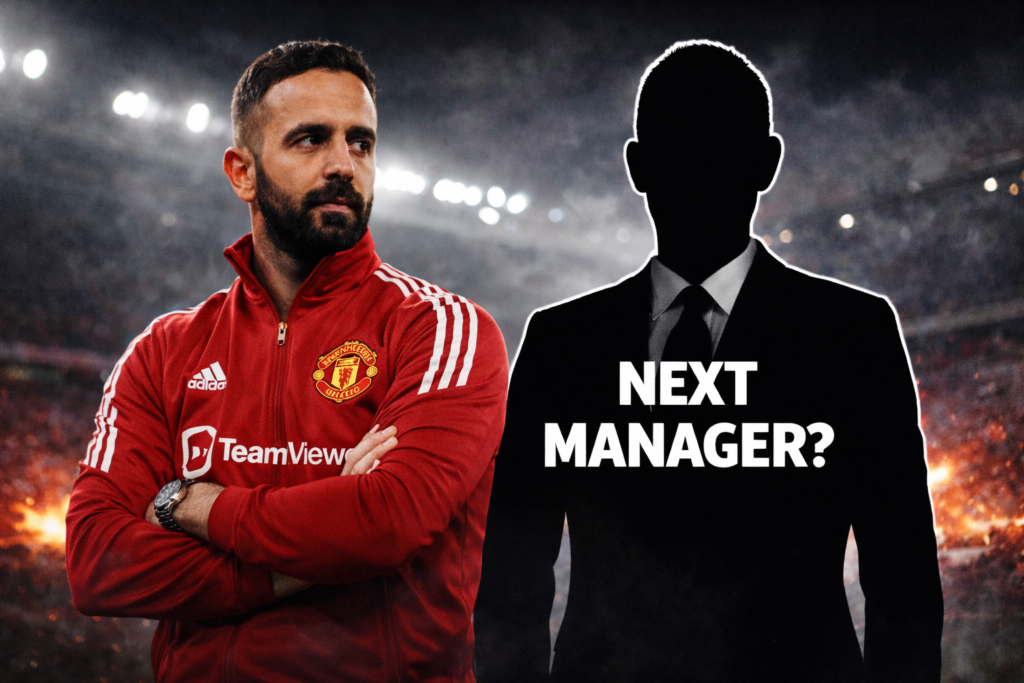
So the questions linger: will there ever be a manager capable of stepping into Sir Alex Ferguson’s shadow? And does the club require new ownership to chart a fresh, bold direction?
There are lessons to be learned elsewhere. Liverpool endured their own prolonged spell in the wilderness before rebuilding with clarity, patience, and a defined footballing identity. Even smaller clubs like Brighton operate with a clear model and a coherent philosophy that guides every decision they make. United, for all their size and resources, have yet to find that same sense of purpose.
There is no quick fix. Every time Manchester United dismiss a manager, the club is forced into yet another reset. Now they are preparing to appoint yet another caretaker until the end of the season — another temporary solution to a long‑term problem.
This is the moment when the word “supporter” truly carries weight. Fans often say, don’t celebrate with us in the good times if you weren’t there during the bad. Well, these are the bad times. And loyalty, patience, and perspective matter more now than ever.